
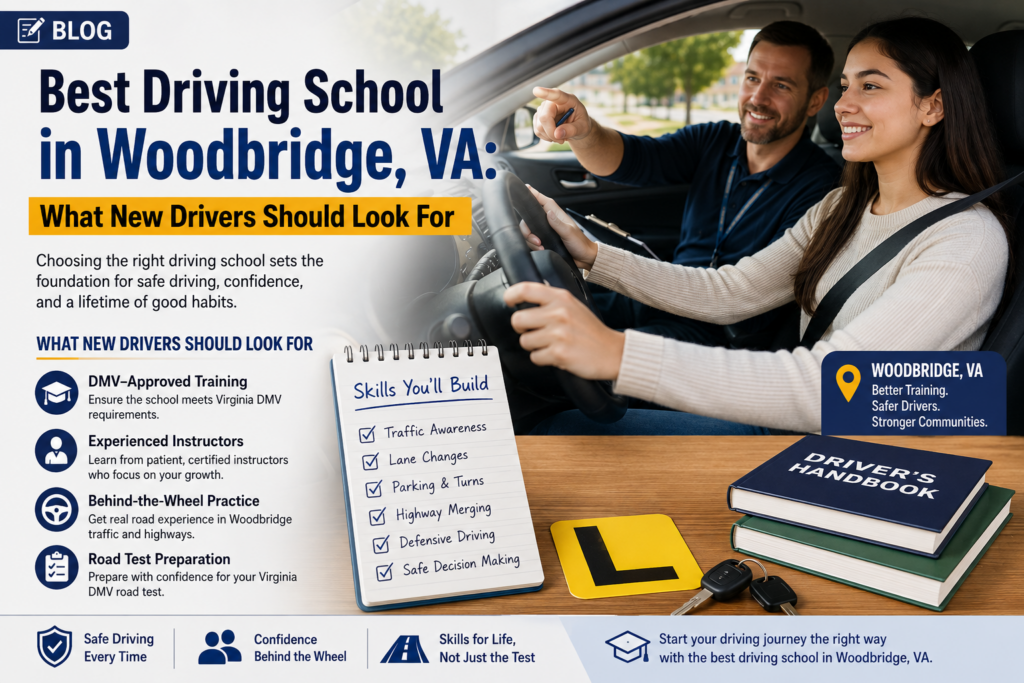
Learning to drive is an important step toward independence. For teens, it can mean getting ready for school, work, and everyday activities. For adults, driving lessons can build confidence after years without driving or help develop better skills for busy roads.
Choosing the best driving school in Woodbridge, VA is not only about finding the lowest price. A good driving school should teach safe habits, practical skills, and calm decision-making. New drivers should look for trained instructors, hands-on practice, flexible lessons, and preparation that matches Virginia DMV requirements.
Why Choosing the Right Driving School Matters
Driving involves more than steering, braking, and changing gears. New drivers must learn how to read traffic, manage speed, check blind spots, maintain safe following distance, and respond to unexpected situations.
A professional instructor can give students structured practice and clear feedback. This approach can help students correct mistakes before they become habits.
The Virginia DMV also has specific requirements for new drivers. For example, Virginia residents under 18 must complete an approved driver education program and hold a learner’s permit for at least nine months before receiving a driver’s license. Requirements can differ for adult first-time drivers, so students should always check the latest DMV guidance for their situation.
What Should You Look for in a Driving School?
1. DMV-Approved Driver Training
Start by checking whether the driving school offers training that meets Virginia DMV requirements. This matters because driver education can form part of the licensing process.
Prime Driving School provides DMV-approved driver training options for teens and adults in Woodbridge. Its programs focus on behind-the-wheel practice, road skills, and real-world driving situations.
Before enrolling, ask the school which course fits your age, permit status, and licensing goal.
2. Experienced and Patient Instructors
New drivers may feel nervous during their first few lessons. A patient instructor can make a major difference.
Look for an instructor who explains each skill clearly instead of simply telling you what to do. Good instruction should help students understand why a driving decision matters.
A strong lesson may cover:
- Mirror and blind-spot checks
- Smooth braking and acceleration
- Lane changes
- Turning and intersection skills
- Parking
- Defensive driving
- Highway merging
- Traffic awareness
Prime Driving School Virginia states that its instructors provide patient, composed feedback and focus on practical driving skills.
3. Real Behind-the-Wheel Practice
Reading a driver’s manual can teach rules, but real driving practice develops confidence.
Woodbridge drivers may encounter busy suburban roads, intersections, school zones, Route 1, and high-speed highway traffic. Prime Driving School specifically highlights training around real-world Northern Virginia conditions, including highway merging and traffic management.
A good driving program should gradually expose students to different road conditions as their skills improve.
4. Teen and Adult Driving Programs
Not every student has the same needs.
A teenager learning to drive for the first time may need basic vehicle control, parking, traffic awareness, and preparation for Virginia’s licensing process.
An adult learner may already understand basic driving but need help with highway driving, parking, confidence, or unfamiliar traffic situations.
Prime Driving School offers programs for both teens and adults, including individual training options.
5. Road Test Preparation
Passing the road test is important, but safe driving should remain the bigger goal.
A quality school can help students practice the skills they may need during the Virginia road skills test. The Virginia DMV states that the road skills test takes place in a vehicle on public roads and requires the applicant to provide a properly equipped vehicle.
Prime Driving School offers DMV road-test preparation, including a pre-test warm-up option and use of a dual-control training vehicle for its DMV appointment road-test service.
Students should confirm their exact DMV requirements before scheduling their test.
Why Local Driving Experience Matters in Woodbridge
Local training can help students become comfortable with the roads they are likely to use after getting their license.
Woodbridge has a mix of residential streets, commercial areas, busy intersections, and major routes. New drivers can benefit from learning how to manage traffic rather than practicing only on quiet roads.
Highway training also deserves attention. Merging requires timing, awareness, and good speed control. Students should learn to check mirrors and blind spots, judge gaps, and enter traffic smoothly.
The goal is not simply to memorize one route. The goal is to develop skills that work on different roads.
How Many Driving Lessons Do You Need?
There is no single number that works for every student.
A beginner may need more practice than someone who already drives regularly. A student who struggles with parking may need additional practice in that area, while another student may need more highway experience.
The best approach is to focus on skill development instead of counting lessons.
Ask your instructor:
- What skills do I already perform well?
- What skills need more practice?
- Am I ready for more complex traffic?
- What should I practice between lessons?
- Am I ready for the DMV road skills test?
This creates a practical learning plan based on the student’s actual ability.
Safety Should Come Before Passing the Test
A driving school should prepare students for life after the test, not only the test itself.
Safe drivers learn to:
- Follow traffic laws
- Keep a safe following distance
- Avoid distracted driving
- Scan the road ahead
- Check mirrors regularly
- Watch for pedestrians and cyclists
- Adjust speed for road conditions
- Stay calm around aggressive drivers
- Make decisions before entering risky situations
These habits can help new drivers become more responsible road users.
Why Prime Driving School Can Be an Option for Woodbridge Drivers
Prime Driving School offers DMV-approved driver training for teens and adults in Woodbridge. Its programs include behind-the-wheel training, teen and adult lessons, defensive driving, highway training, and DMV road-test preparation.
The school also offers individual 90-minute lessons for students who want focused practice on specific skills such as parking, highway merging, or road-test preparation.
For students and parents comparing local options, the right choice should come down to training quality, instructor experience, safety focus, scheduling, course requirements, and the student’s specific goals.
Final Thoughts
Finding the Driving school in Woodbridge, VA starts with looking beyond price. New drivers need practical training, patient instruction, safety-focused lessons, and preparation that matches Virginia’s licensing rules.
Before choosing a school, check its training options, instructor qualifications, lesson structure, vehicle safety features, road-test preparation, and experience with students at your skill level.
For Woodbridge teens and adults, professional behind-the-wheel training can provide a structured path toward greater confidence and safer driving.
FAQs About Driving Schools in Woodbridge, VA
What is the best driving school in Woodbridge, VA?
The best choice depends on your age, experience, schedule, budget, and licensing goal. Look for a DMV-approved program, qualified instructors, practical behind-the-wheel training, and strong safety education.
Does Prime Driving School offer driving lessons in Woodbridge?
Yes. Prime Driving School offers driving training for teens and adults in Woodbridge, including behind-the-wheel instruction and road-test preparation.
Can adults take driving lessons in Woodbridge?
Yes. Adult beginners and experienced drivers who want additional practice can take driving lessons. Prime Driving School offers adult training options, including individual lessons and other course options.
How can I prepare for the Virginia DMV road test?
Practice core skills such as lane changes, turns, parking, stopping, traffic awareness, and safe vehicle control. The Virginia DMV also requires an appropriate vehicle and specific documentation for the road skills test.
How long must a Virginia teen hold a learner’s permit?
For Virginia residents under 18, the current DMV guidance requires a learner’s permit for at least nine months along with completion of an approved driver education program before receiving a driver’s license.
Do driving lessons help nervous drivers?
Yes. Structured practice with a patient instructor can help nervous students become more familiar with vehicle controls, traffic situations, and decision-making. Progress usually comes from repeated practice and constructive feedback.
What should I bring to my first driving lesson?
Ask your driving school about its specific requirements. In general, students should have the required learner’s permit or documentation for their course and wear comfortable clothing and suitable footwear for driving.
Is road-test preparation the same as learning to drive?
No. Road-test preparation focuses on the skills and procedures needed for the test. Complete driver training should also develop safe habits that students can use after they earn their license.
Choose Training That Builds Lifelong Driving Skills
A driver’s license gives you permission to drive, but good training helps you drive responsibly. If you are comparing driving schools in Woodbridge, focus on safety, practical experience, instructor quality, and a program that fits your individual needs.
Prime Driving School provides Woodbridge-area training for teens and adults with a focus on practical, DMV-aligned driver education and real-world driving skills.